From Petri Dish to Pod
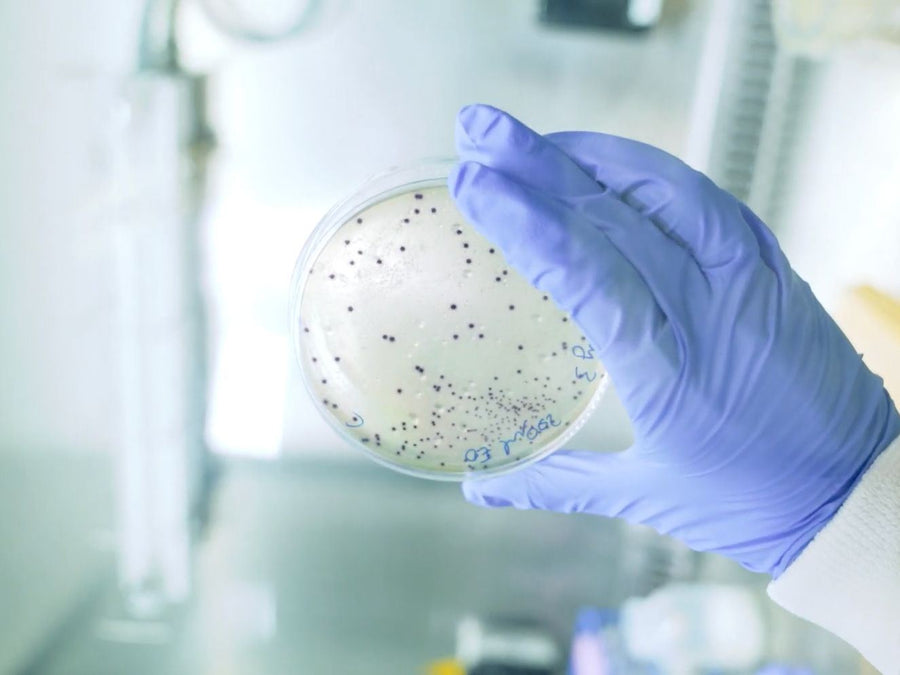
Byomi® didn’t begin with a product brief. It began with three scientists, breast milk samples, a Petri dish and a frustrating research hurdle.
Some of the most important discoveries in history happened when no one was looking for them: penicillin was discovered when Alexander Fleming noticed mould killing bacteria, X-rays when Wilhelm Röntgen discovered that invisible rays could pass through objects, and Velcro when George de Mestral wondered why burrs stuck to his clothes.
Byomi® didn’t begin with a product brief. There was no strategy deck, no consumer insight, no focus group run by eager marketers hellbent on finding the next product trend for parents-on-the-go.
No. It began with three scientists, breast milk samples, a Petri dish and a frustrating research hurdle.
We’re Dr Tara O’Driscoll, Dr Lydia Mapstone and Dr Sioned Fôn Jones. In 2019, we were working towards our PhDs at UCL Great Ormond Street Institute of Child Health, studying something that was only just beginning to attract serious scientific attention: the breast milk microbiome.
Seven years of research followed. Seven years of asking questions, running experiments, analysing samples and learning more about the extraordinary biology of breast milk. And somewhere along the way, our research led us somewhere we never expected: towards a product.
The science was straightforward enough. We knew breast milk wasn’t just food. We knew it contained a large and diverse living community of bacteria, alongside antioxidants, fatty acids such as omega-3s, vitamins and a remarkable range of other biological components. What we wanted to understand was how these microbes helped shape the developing microbiome of the infant gut.
And this matters because a baby’s gut microbiome is being built from scratch during the earliest days of life. The bacteria that establish there don’t just live in the gut. They interact with the immune system, helping to teach it what to tolerate, what to respond to and how to develop.
But we hit a snag. Many of the bacteria we were trying to study were dying before we could fully analyse them. We knew oxygen was part of the problem. The challenge was working out how to protect these fragile microbes from it, so we could study them properly.
Many of the bacteria naturally present in breast milk are anaerobic, meaning they have adapted to thrive in environments where oxygen is scarce. In nature, breast milk passes directly from the mammary gland to the baby, and into the gut, without prolonged exposure to oxygen.
Expressing and storing milk changes that. It exposes the milk, and the oxygen-sensitive bacteria within it, to oxygen.
At first, this was simply a laboratory problem. Oxygen was making it difficult to grow bacteria from the breast milk microbiome. So we found a way to quickly remove the oxygen from the bottles our donors had expressed into. Then came the light-bulb moment: if oxygen was killing bacteria in our samples, could the same thing be happening to stored breast milk everywhere?
This made us stop and think: what other effects could oxygen be having on breast milk? We hypothesised that it would react with antioxidants, minerals and vitamins, using them up before the infant could ingest them and benefit from their protective effects. Another likely candidate was omega-3s, the long-chain fats needed for eye and brain development, which are easily altered by oxidation.
The implications suddenly reached far beyond our research. We realised that millions of mums may be expressing and storing breast milk, assuming it remains much the same as when it left their breast, when in fact its biology can begin to change. And that could mean changing some of the very living benefits that help establish their baby’s developing gut microbiome and educate their developing immune system, as well as protect against cell damage and aid in organ growth.
We hadn’t set out to invent a new breast milk storage system. We were investigating something else entirely, but these two worlds collided as soon as we understood that oxygen was a threat to the very microbiome we had been so fascinated by in the lab.
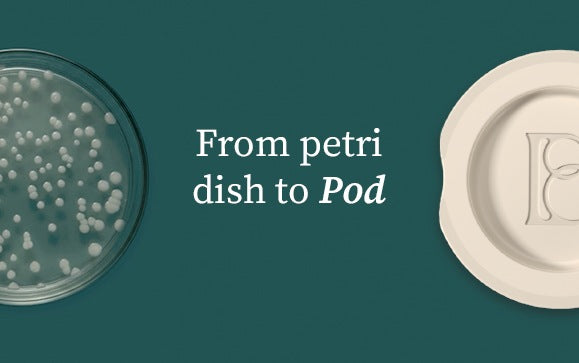
And that’s how Byomi® was born, in a Petri dish. Kind of.
Of course, discovering something in a laboratory is one thing. Getting a polished product into the hands of parents is quite another.
What followed were years of turning a scientific insight into something that could actually work in the real world. Thousands of design decisions. Countless prototypes. Materials tested and retested. Working with manufacturing partners in China. Going to China. Designing tiny details on adaptors, seals and Pods. Refining colours and materials again and again. None of which we had any experience in.
And as if that weren’t bad enough, somewhere along the way, we had to become entrepreneurs. We went from being PhD scientists to becoming CEOs, CFOs and COOs.
Because it’s one thing to discover that oxygen is the problem and have a crude laboratory workaround to fix it. It’s quite another to design something small enough to sit inside any breast milk bottle, simple enough for a tired mum to use at 3am, safe enough for a human baby, and robust enough to become part of everyday life.
We had to learn how to turn a scientific discovery into a product people could actually use.
Byomi® is a small oxygen-absorbing Pod that sits inside your breast milk bottle or storage container, held in place by a reusable bottle adapter. It creates an oxygen-protected environment around the milk, helping to protect its natural microbiome and keep it fresher for longer. Plus, it’s designed to work with the baby bottles you already own.
Pumped and stored breast milk is still full of good things. That hasn’t changed. What we’re doing is helping keep more of its beneficial living bacteria alive and nutrients intact, so more of the living biology nature put there can make it from the bottle to your baby.
As Lydia says: “Breast milk storage guidance has focused primarily on safety, not on preserving what makes breast milk unique. Our solution keeps stored milk much closer to freshly expressed.”
However you feed your baby, you’re doing an incredible job. Here at BoobyBiome, we don’t think about one way of feeding being better than another. It’s about giving every family the chance to protect the living bacteria and nutrients nature intended, whether you pump exclusively or combine feeding methods.
We’re scientists first, so we hold ourselves to a scientific standard. We’ve committed to publishing our research in peer-reviewed papers, so you don’t have to take our word for it.
Our aim is simple: to help protect the living biology in breast milk, support the developing baby gut microbiome and help give every baby the foundations for lifelong health.
Byomi® is just the first step. We can’t wait to show you what comes next.
This post is for information only and is not medical advice. Please talk to your midwife, health visitor or GP about feeding decisions for your baby.